
Our Design Philosophy of Partnering with Artisans in Guatemala
We have spent the last ten years developing products in partnership with master weavers across Guatemala. In that time, we have developed a design philosophy that guides every project we take on, whether it is a single product for a small brand or a full collection for an established retailer. Here is how we think about design at Casa Flor Designs.
Pillar 1: FUNCTIONALITY IS AS IMPORTANT AS BEAUTY
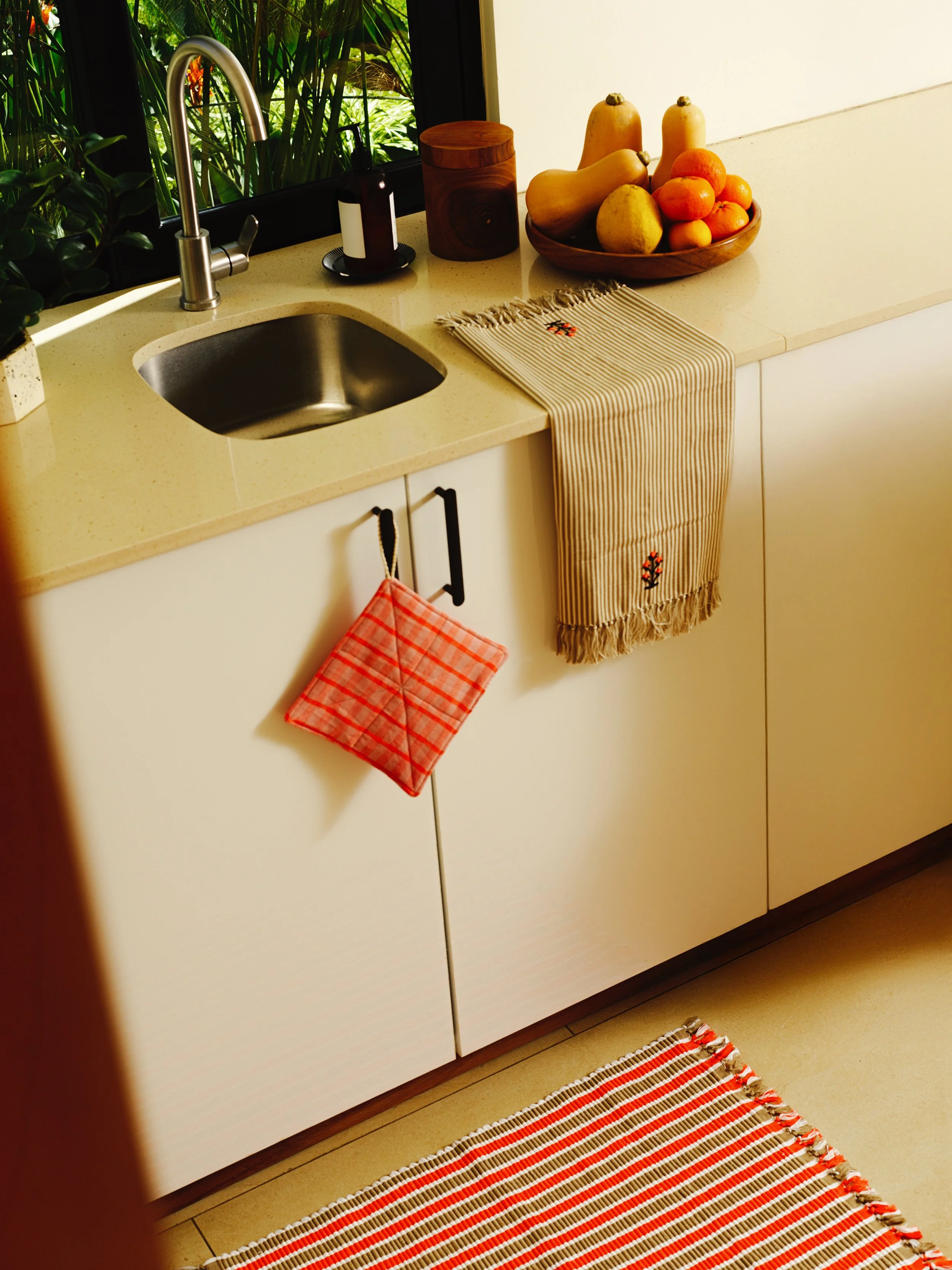
Everything we develop has to earn its place in someone's home or daily life, and that means function is considered from the very first design conversation, not added as an afterthought. After all, we are product developers, not artists. But that doesn't mean we can't add a touch of beauty.
Take the Bougainvillea Plaid Pot Holder for example. The hanger, which on most pot holders is a simple fabric loop, is a hand twisted tie. It is now functional, beautiful, and a differentiator. Those small decisions are what separate a designed object from a reproduced one.
PILLAR 2: CLARITY BEFORE WEAVING
Before a single thread goes on the loom, everyone involved in the project needs to be aligned. That means clarity on budget, on vision, on who the final customer is and how they will use the product, and on materials. A mood board is a perfectly good starting point, we want a shared visual reference, something that tells us where your head is. But vision alone is not enough. We translate that vision into a technical packagethat accounts for everything the weaving process requires. A technical package is the document that keeps everyone working toward the same thing.
PILLAR 3: COLLABORATIVE DESIGN WITH MASTER WEAVERS
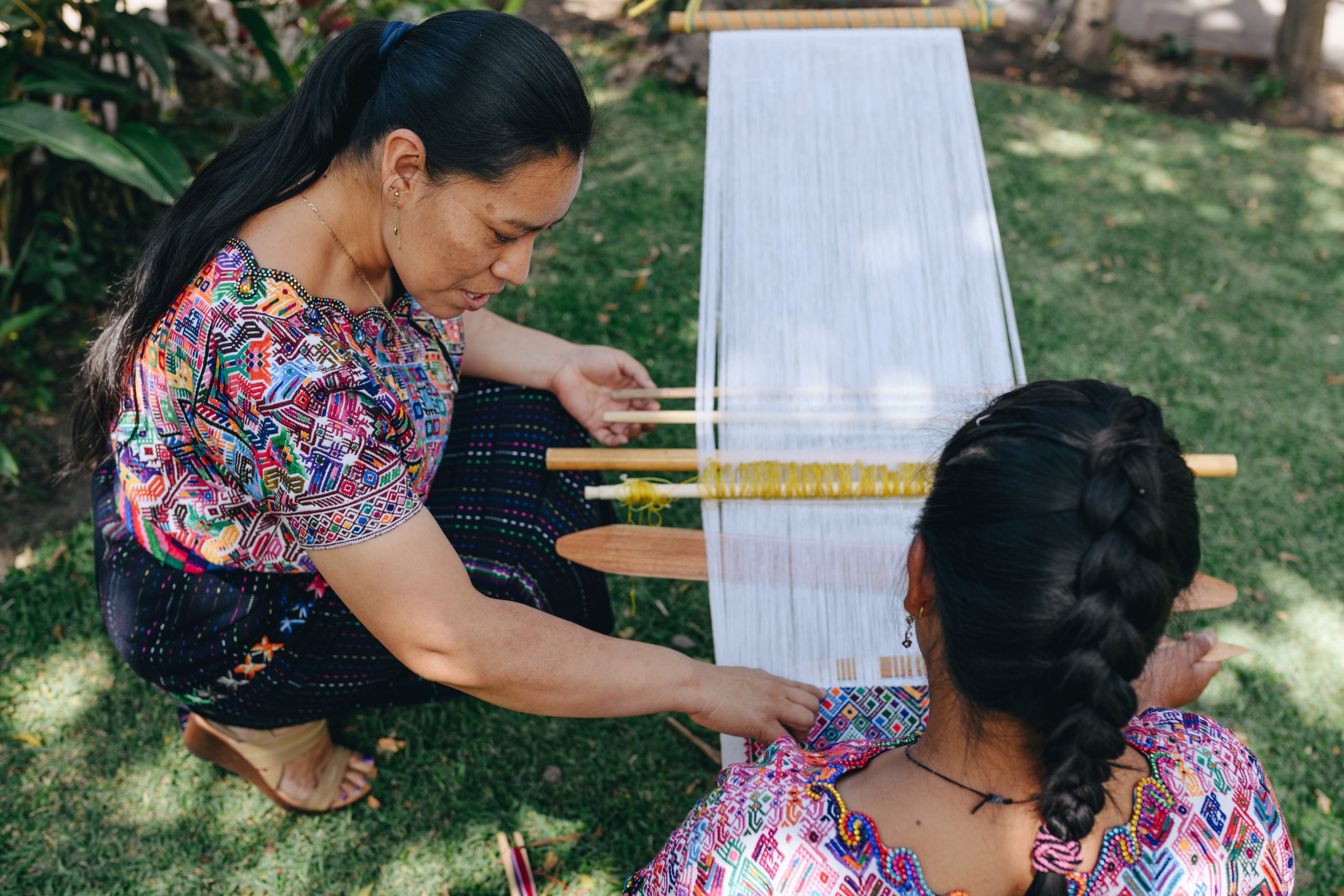
Once we have a confirmed direction, the specs go to the weaver. And this is where something important happens. Flory, our Director, is an indigenous weaver herself. Her shared language with the cooperatives we partner with is what makes this entire process possible. She is the bridge between the design world and the weaving world, and her role in every project cannot be overstated.
The weavers we partner with carry complex mathematical calculations entirely in their heads. They can look at a spec and tell us immediately whether a certain scale is achievable, whether a motif will resolve correctly, whether a design will work. Sometimes the answer is that it won't. Together with the client, we find something that does. That conversation between our design team, our client, and the weaver is what we mean by collaborative design. The result is never a reproduction of something that already exists. It is something specific, resolved, and entirely your own.
PILLAR 4: NEVER FORGETTING THE HUMANITY
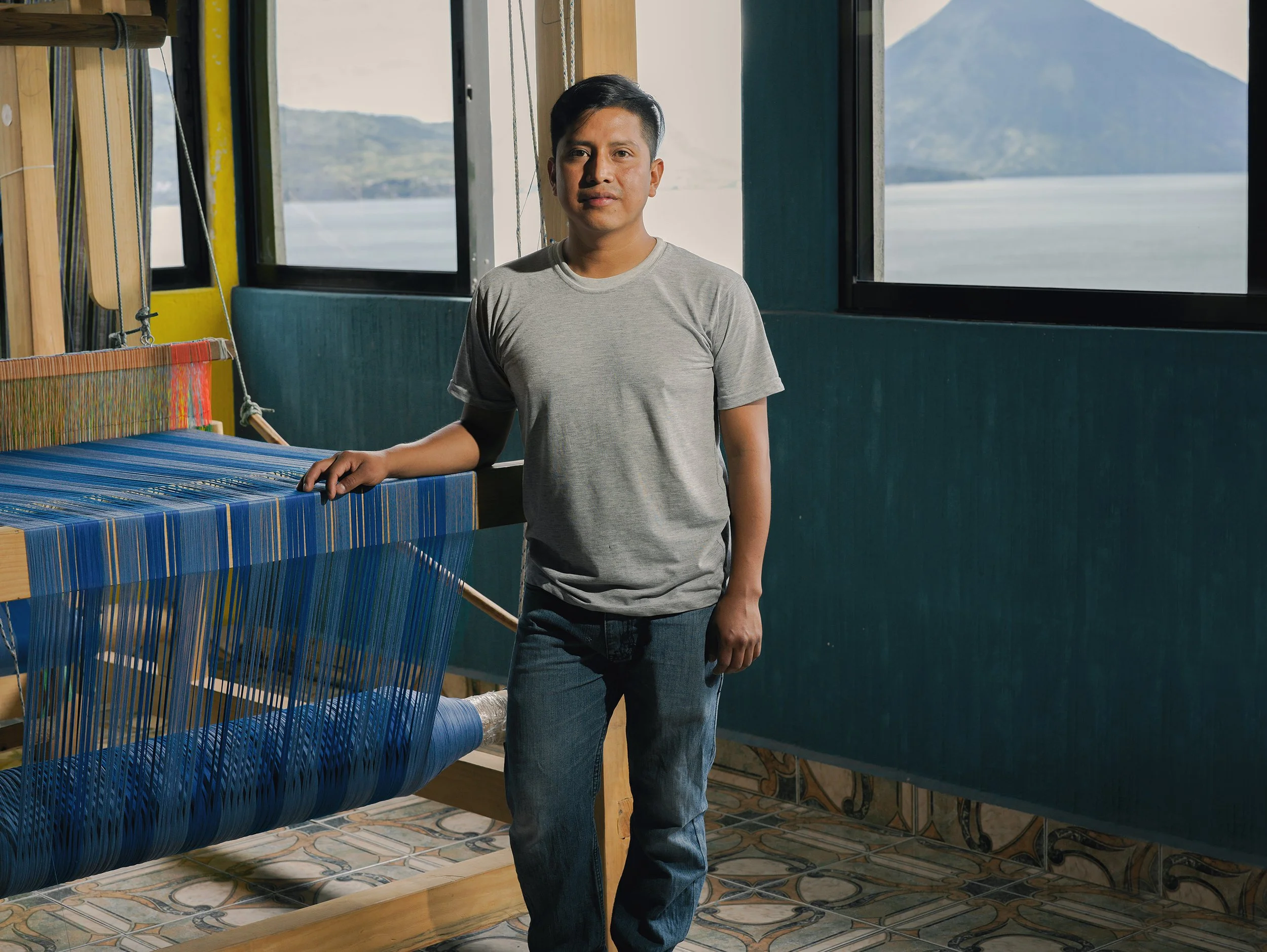
At the end of the day, we are celebrating what is handmade. And handmade has limitations. We listen to those limitations. When a weaver tells us something isn't possible, we don't push back, we pivot. When a timeline needs to shift to accommodate the natural rhythm of cooperative life, we communicate that to our clients and adjust. When a design needs to be simplified so that it remains sustainable for the artisan producing it, we simplify it. This is not a compromise. It is the point. The humanity in every product we make, the hands behind it, the knowledge behind those hands, and the culture behind that knowledge is what makes it worth making at all. Our job as designers is to honor that at every stage of the process.