
Storytelling Through Woven Cloth in Guatemala

Textiles in Guatemala are enticing to anyone who sees them. That is good design. It doesn't matter if you don't know anything about how a textile is made, there are layers in traditional Guatemalan textiles that keep you looking and wanting to discover more. However, you might be surprised to discover that there is way more behind these textiles than the time and skill required to weave them.
READING A TEXTILE LIKE A BOOK
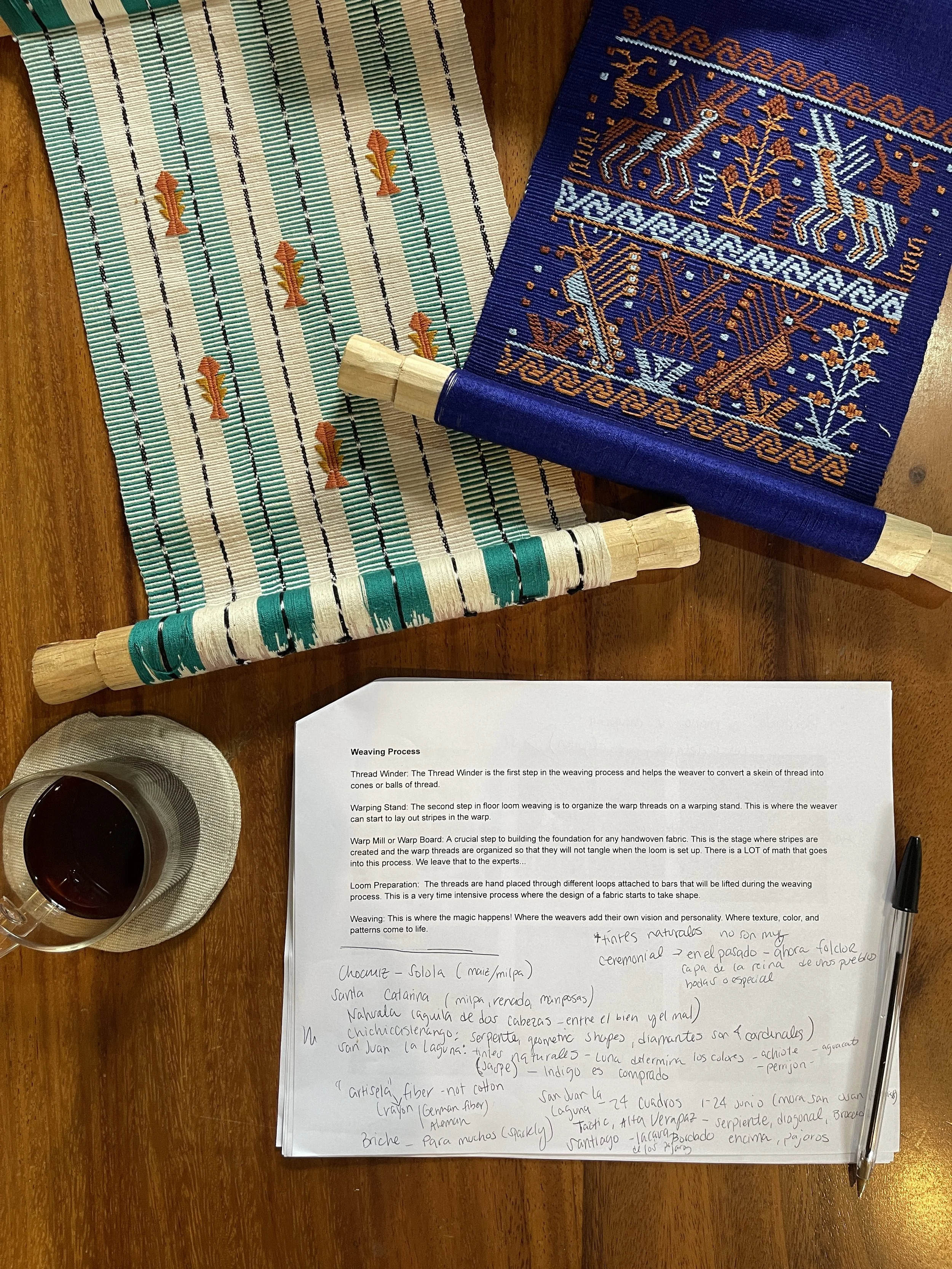
Traditional Guatemalan textiles are not decorative in the casual sense of the word. Every motif woven into the fabric carries meaning: cosmological, spiritual, and regional. Once you know what to look for, it is so fun to try to place where a textile originates or what the weaver might have been trying to convey.
The diamond is one of the most widely recognized symbols in Maya textile design. It represents the universe and Maya cosmology: the four cardinal directions, the cycle of the sun, the structure of the world itself. You will find it woven into textiles across Guatemala in endless variations, each community interpreting it through their own regional tradition.
Animals appear frequently as well. Diamonds and zigzags come together to form the Feathered Serpent iconography, a frequent Maya icon symbolizing transformation, renewal, and the cyclical nature of time. You can learn more about this Iconography in our deep dive into textiles from Nahuala.
The eight pointed star is another recurring symbol, representing the movements of Venus across the sky, which held deep significance in Maya astronomy and ritual life. When you see it woven into a huipil or a ceremonial textile, you are looking at a cosmological map rendered in thread. Pretty mind blowing, right?
A GLIMPSE INTO THE WEAVER'S LIFE
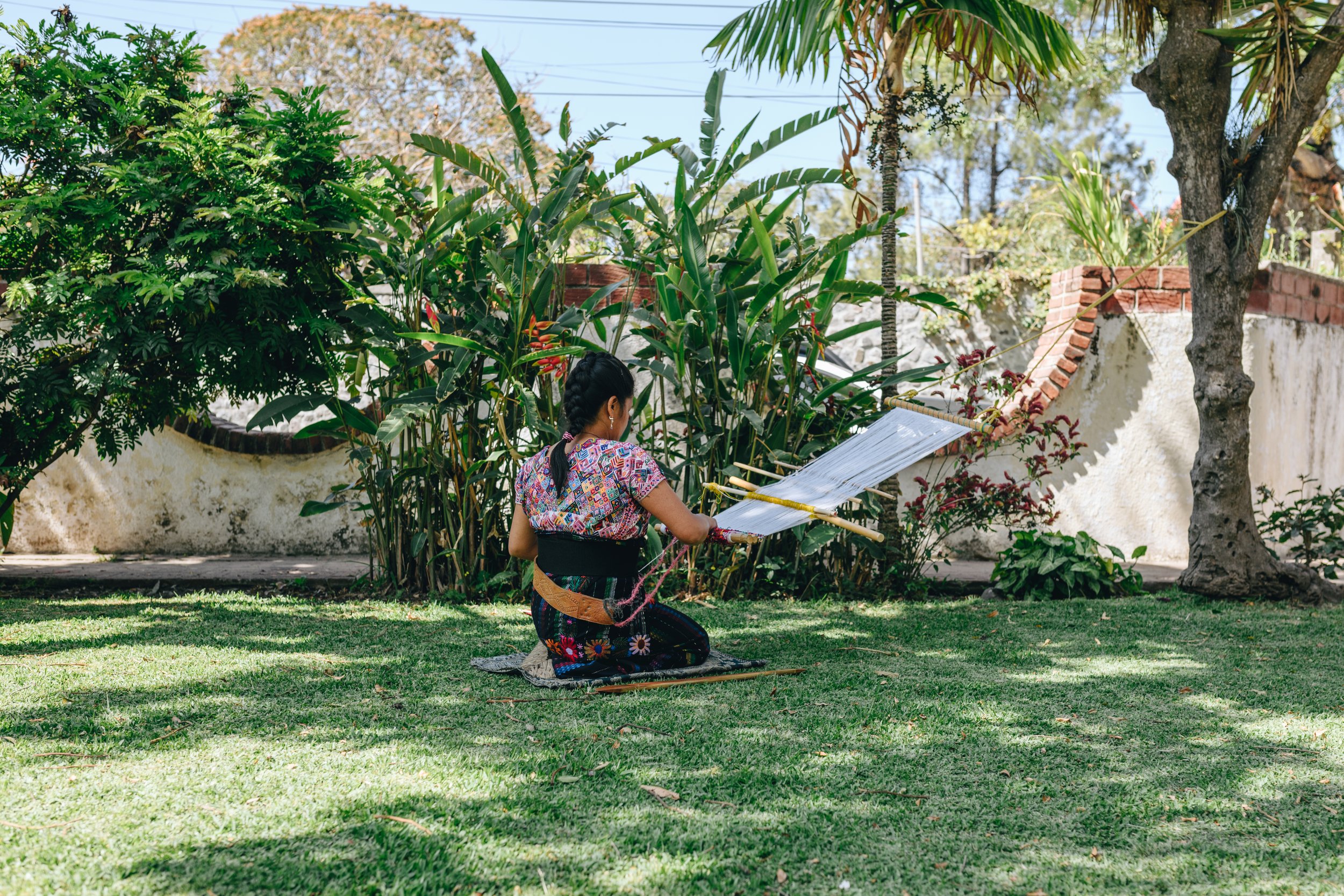
Weaving is an incredibly intimate craft. The backstrap loom is literally attached to the weaver's body. One end is tied to a tree or post and the other strapped around her waist. She uses the movement of her own body to create tension in the fabric. There is no machine between the weaver and the textile. The cloth carries her physical presence in every row.
In Maya mythology, the goddess Ixchel, goddess of the moon, fertility, and weaving, is depicted at her loom weaving the thread of life, which symbolizes the umbilical cord and the placenta. I recently learned that Ixchel also evokes the notion of weaving not merely as a practical craft but as a cosmic creative act: the weaver creates order from chaos, transforming raw thread into structured pattern. If you have ever taken a weaving class in Guatemala, your teacher might have had you detangle thread just to practice patience before you even started weaving. I wonder if there was a deeper purpose to that exercise.
A GENERATIONAL LANGUAGE
Backstrap weaving is not taught in classrooms. It is passed down from grandmother to mother to daughter through observation, repetition, and time spent together at the loom. The techniques, the symbols, the regional traditions, the meanings behind each motif: all of it travels through generations without ever being written down.
This is what makes Guatemalan textiles so extraordinary, and so irreplaceable. They are not just beautiful objects. They are a living record of Maya culture, identity, and resilience. A language that has survived colonization, globalization, and the slow erosion of fast fashion, carried forward by the hands of women who have refused to let it disappear.
WEAVERS ARE ARTISTS
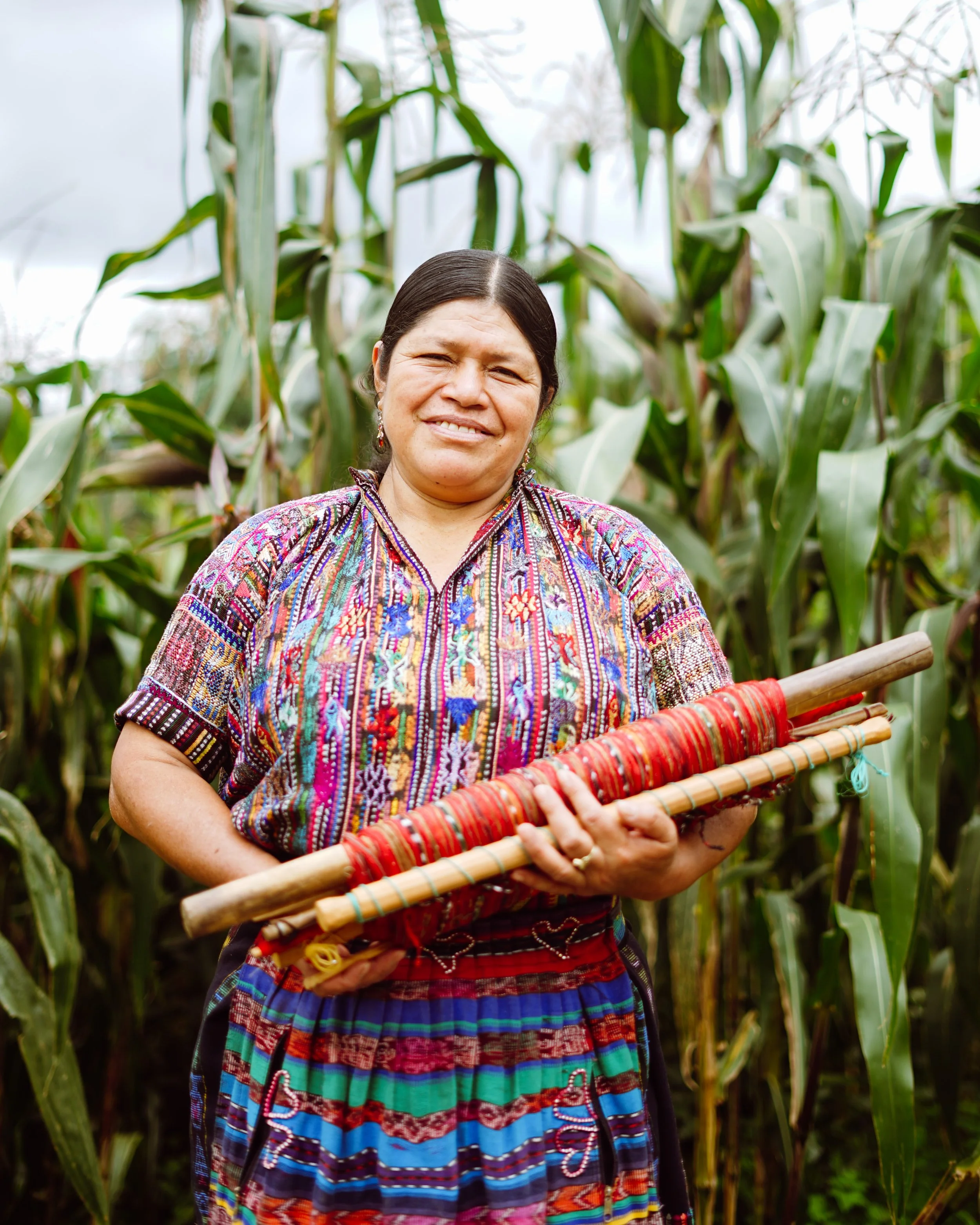
Matea Morales Pabo - Master Weaver and Artist in Guatemala
Just like any form of art, interpretation is part of the experience. The iconography we described above represents some of the most common and widely recognized symbols in Maya textile design, but every weaver brings her own perspective to her work.
There is nothing more enriching than asking the weaver herself what she was thinking about when she was weaving, or what her own interpretation of a piece is. Sometimes people prefer not to share this. As we mentioned, weaving can be a deeply intimate act. But if you ever find yourself traveling to Guatemala and have the opportunity to meet the women behind these textiles, ask them about their art. You might be surprised by what you discover.
At Casa Flor Designs, we feel privileged to be in partnership with such a rich textile culture in Guatemala. When our clients ask us to help tell the stories behind the products they produce with us, we get really excited about that opportunity for the weavers to share their story. If you are a brand looking to communicate the depth and meaning behind your handwoven products, check out our Conscious Marketing Services.