
The Mathematics Behind Guatemalan Backstrap Weaving
One of the things that impresses our Director, Flory, the most about working with the backstrap weavers we partner with in Guatemala is their exceptional ability to calculate highly complex textile designs despite not having had the opportunity to attend school, much less pursue a formal design degree.
It challenges a common assumption about where technical skill comes from.
In traditional Guatemalan backstrap weaving, mathematics is not theoretical. It is built into the structure of every handwoven textile.

THE QUIET MATH BEHIND EVERY DESIGN
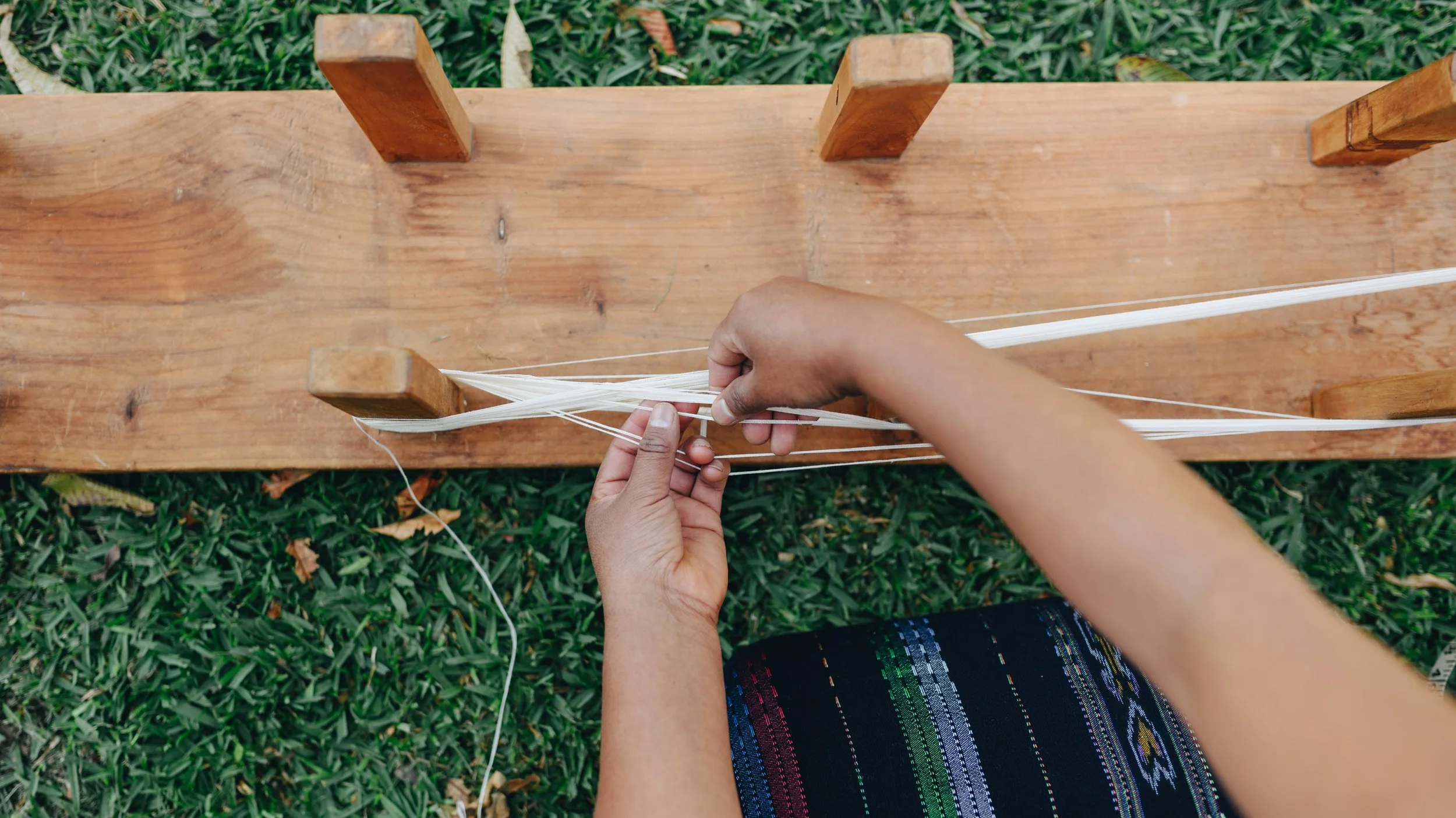
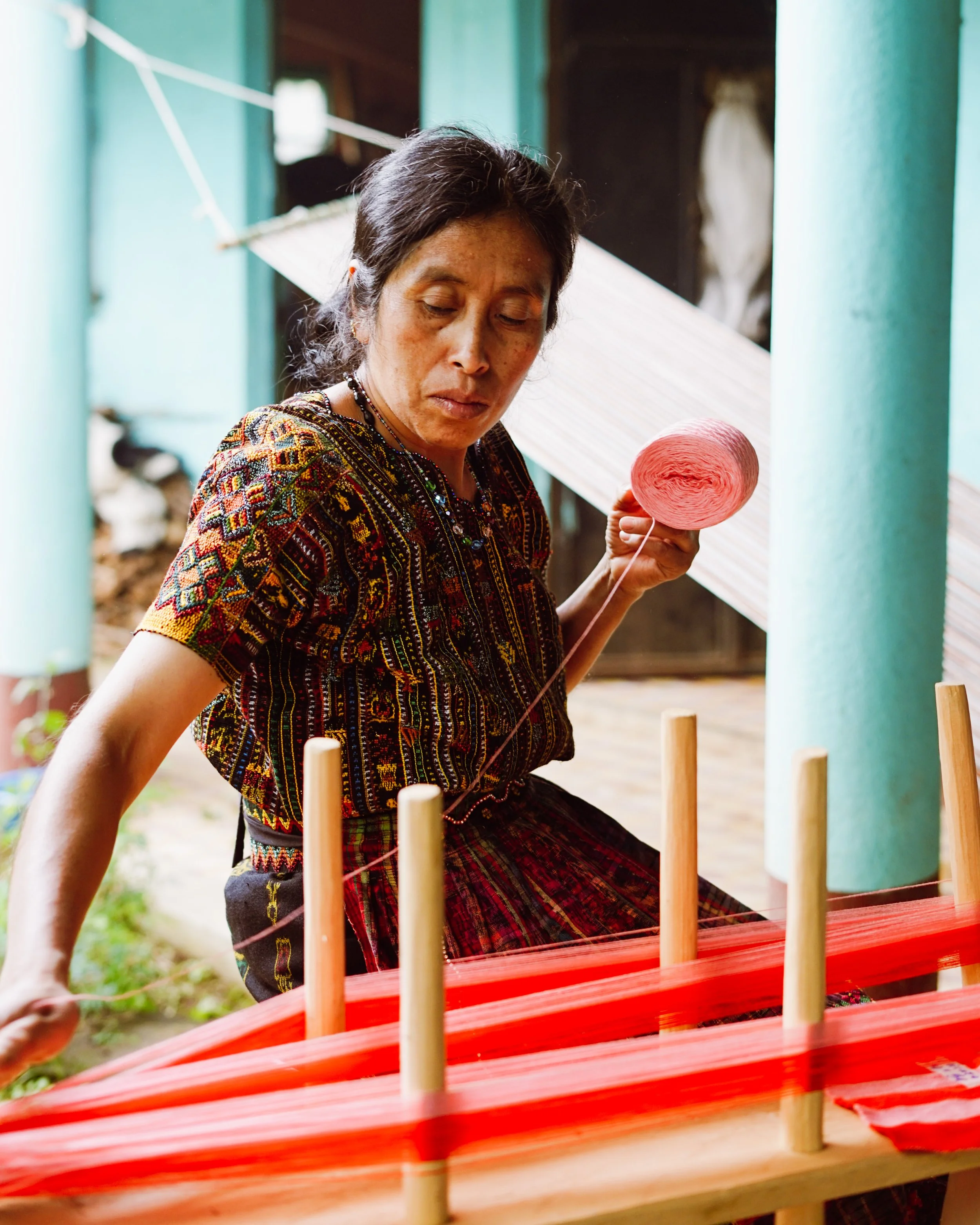
Before a weaver touches the loom, the math has already begun. She must calculate how many threads she needs, weigh them out, and set up her warp - the foundational threads that determine the width and structure of the entire textile. Stripe sequences and plaid compositions are decided at this stage. A miscalculation here affects everything that follows.
Once she begins weaving, the counting continues. To build a brocade motif, she lifts individual warp threads one by one with her fingers, each lift corresponding to a precise position within the pattern. She cannot see the finished design until several inches have been woven, but she doesn't need to. The calculation lives in her hands, developed through years of practice and passed down through the generations before her. Each brocade design carries its own mathematical logic, and she holds all of it in her head.
COLLABORATIVE DESIGN RELIES ON MASTER WEAVER EXPERTISE
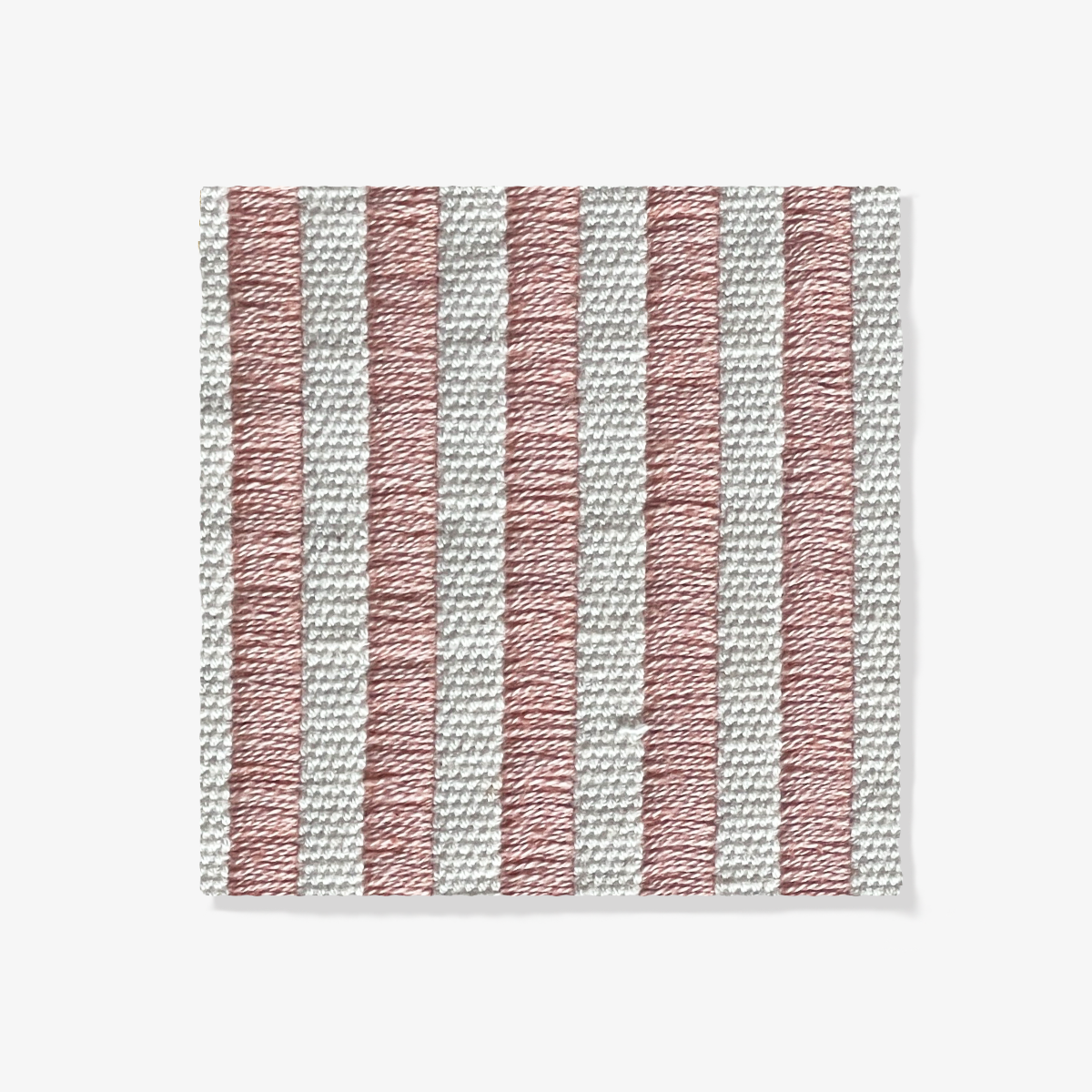
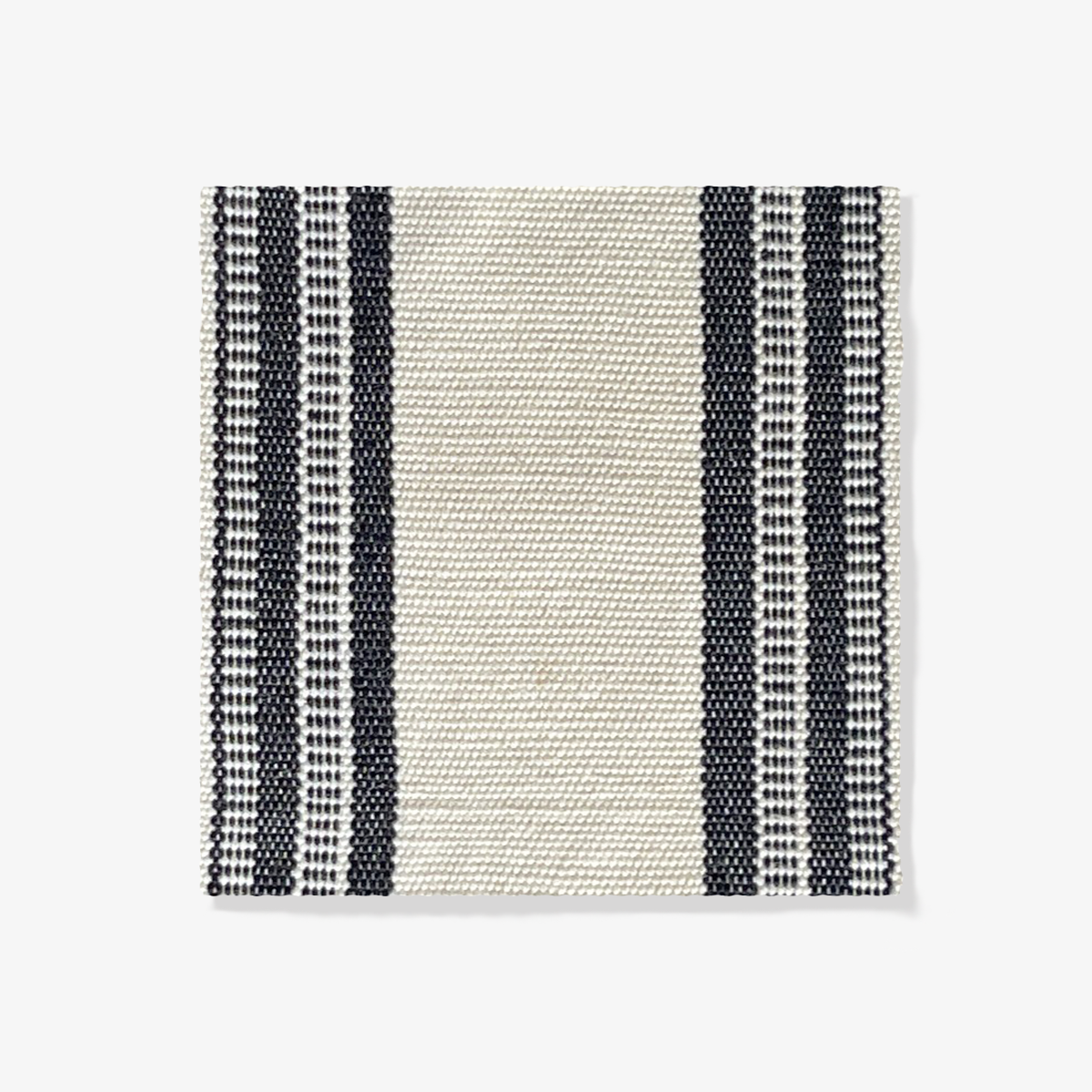
When a brand partner comes to us with a custom design, we sometimes begin with a digital mock up which is a way to align on scale, proportion, and general vision before production begins. But it is the weavers who determine how that vision becomes a textile.
Based on the final measurements required for a product, they suggest adjustments to the design. A motif may need to be scaled up or down to sit correctly within the width of the fabric. A stripe sequence may need to shift to achieve the right proportion. These are not small decisions, they require the same mathematical fluency described above, applied now to a new design problem.
This is what we mean by collaborative design. We bring the brief, the master weavers bring the expertise, and the final product is a result of both.
For a brand partner, that means access to a design intelligence that cannot be replicated by a factory or a software tool.


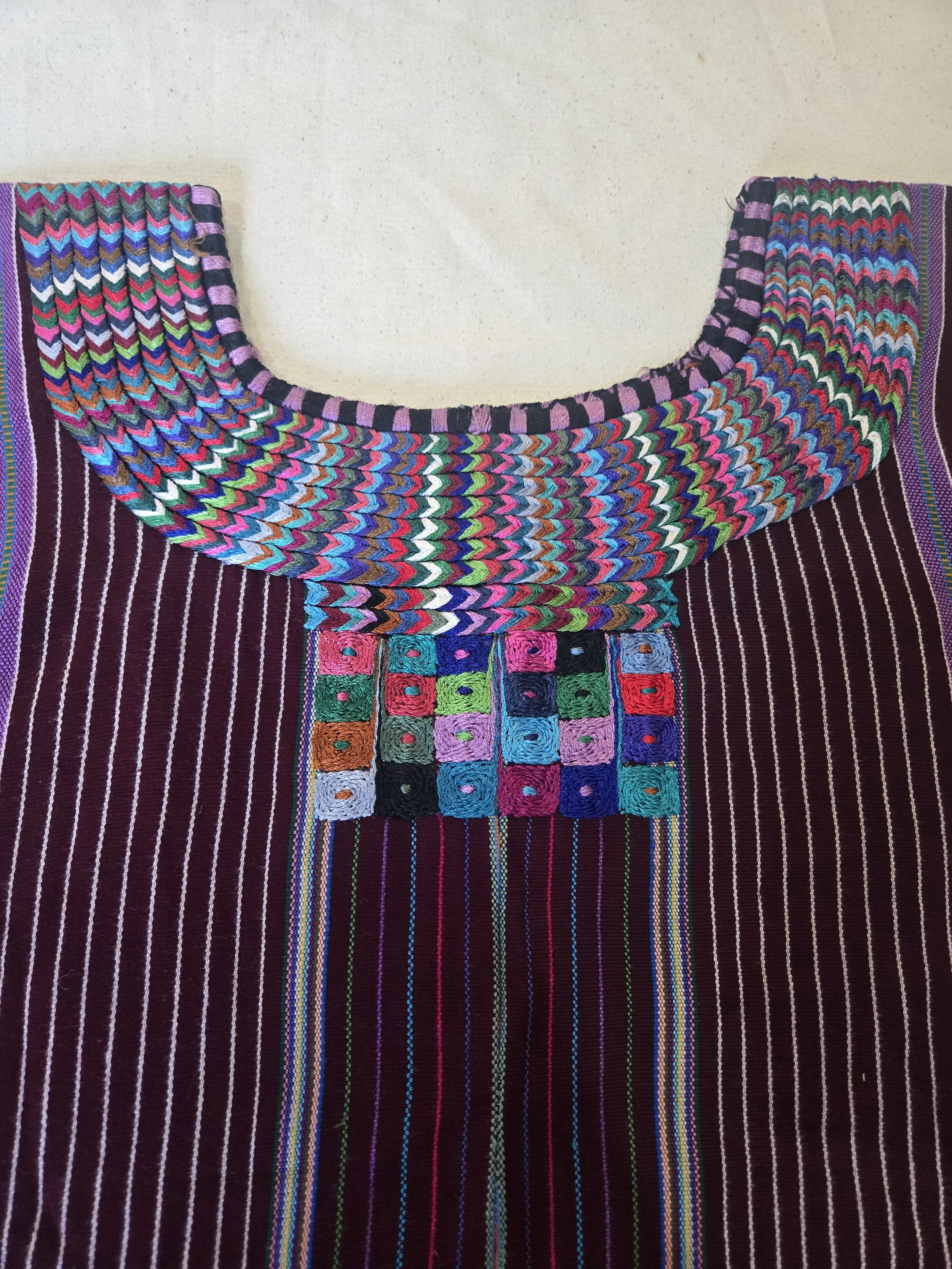
SEEING THE MATHEMATICS IN TRADITIONAL GUATEMALAN TEXTILES
The mathematical design intelligence we see in our collaborative work doesn't begin with production orders. It has always been present in traditional Guatemalan textiles.
Photographed here is a traditional huipil from San Juan La Laguna in Guatemala. Around the neckline are 24 embroidered squares arranged intentionally in four rows of six. This numerical structure is worn throughout the lakeside town and repeated consistently within the community. The 24 squares represent the founding of the town on June 24th.
Traditional Guatemalan textiles often follow similar systems of repetition, symmetry, and proportional balance. These are not random embellishments. They are structured compositions that require planning and precision.
When we speak about preserving backstrap weaving in Guatemala, we are also preserving an embedded system of knowledge, one that includes geometry, measurement, pattern sequencing, and material calculation.
You can see Flory’s Original video Interview that inspired this blog here: