
Explore Guatemala Textile Design From Nahuala
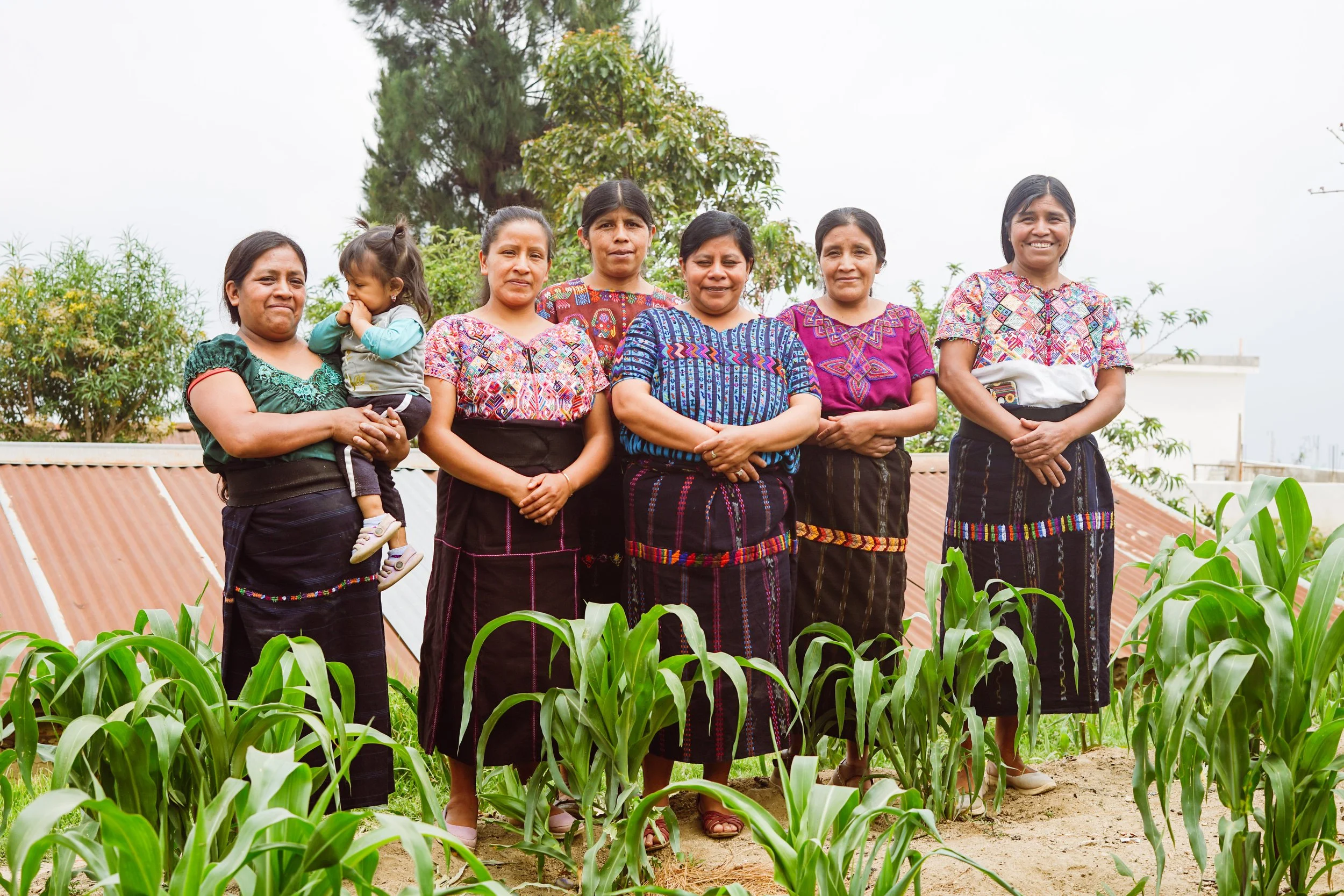
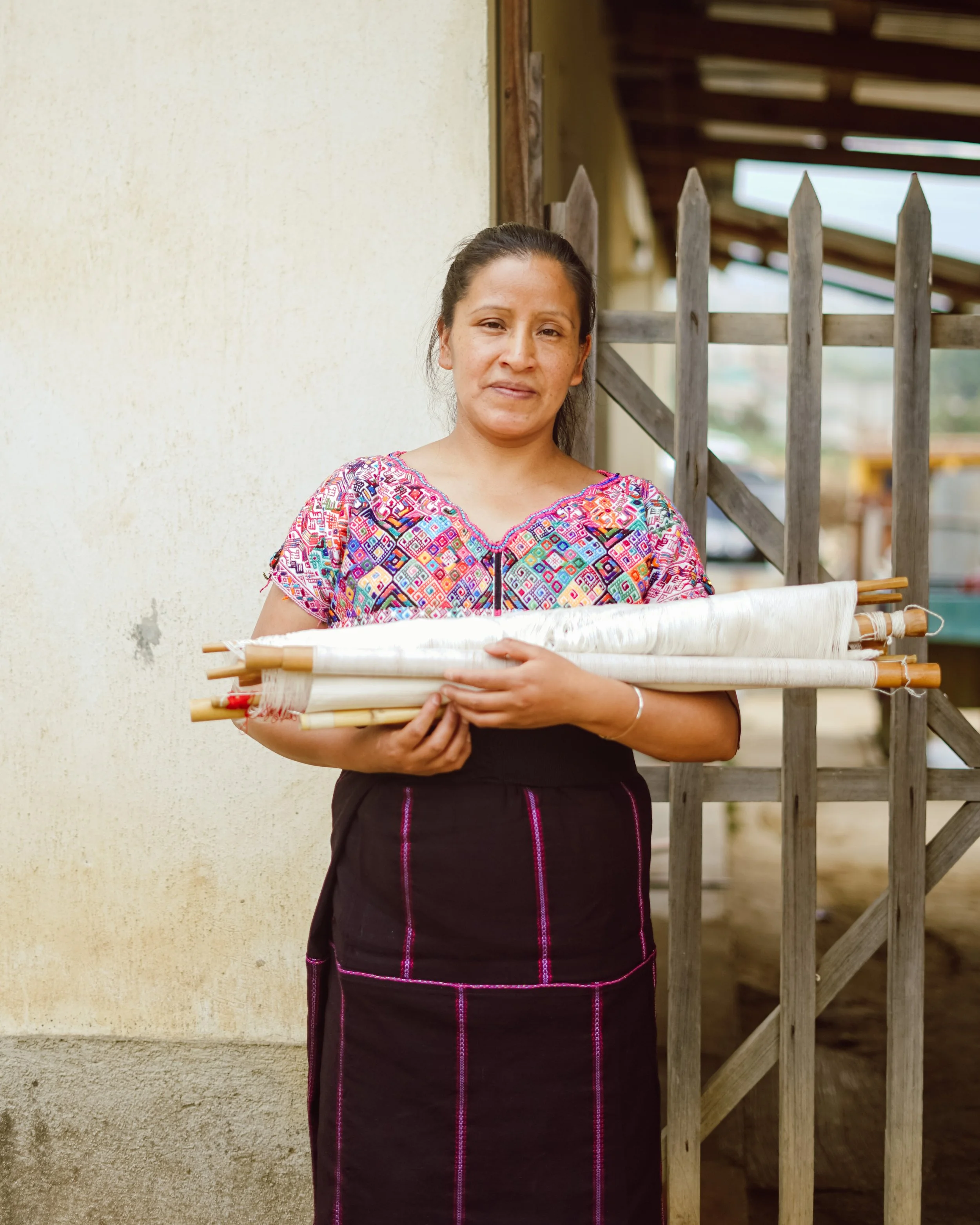

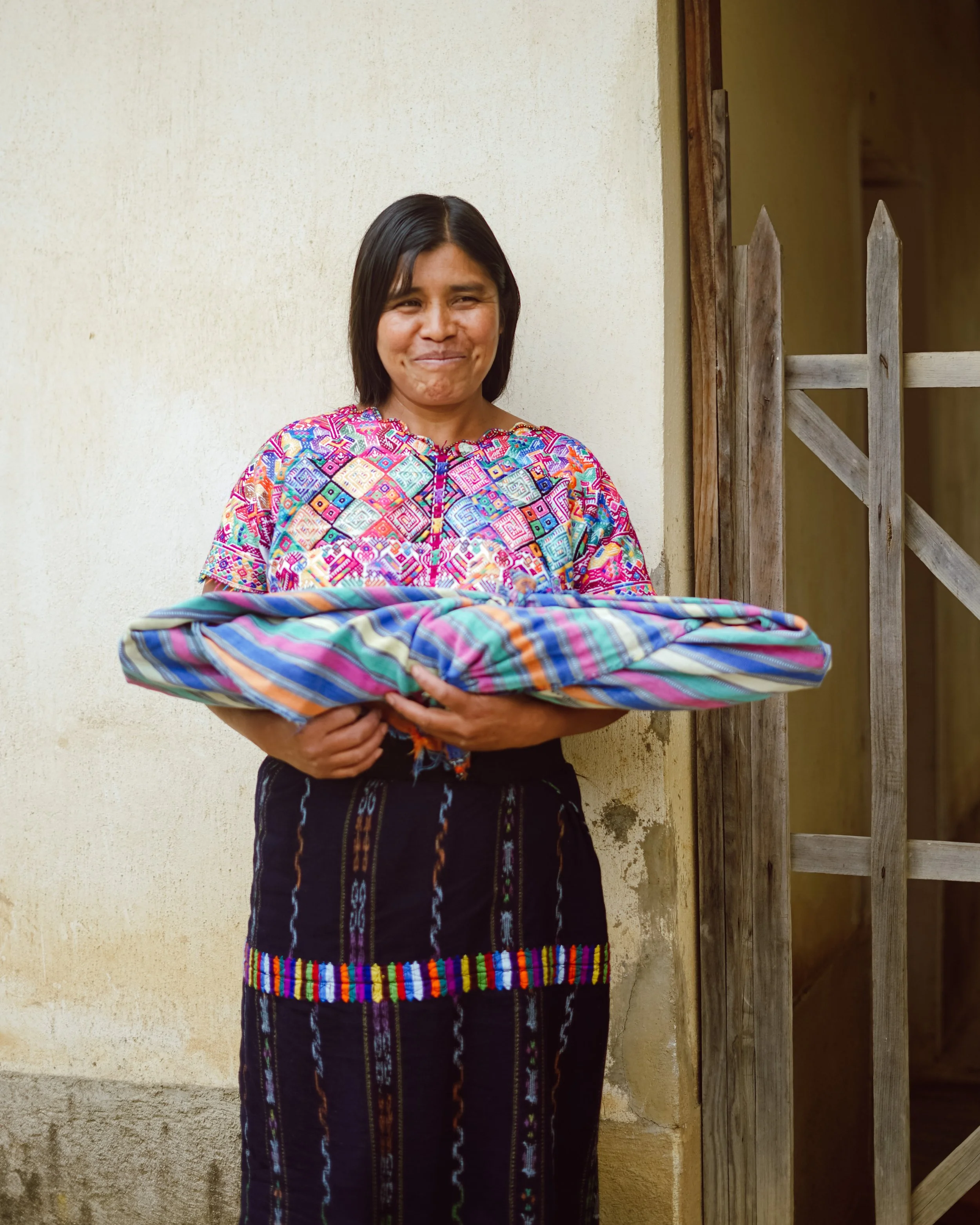
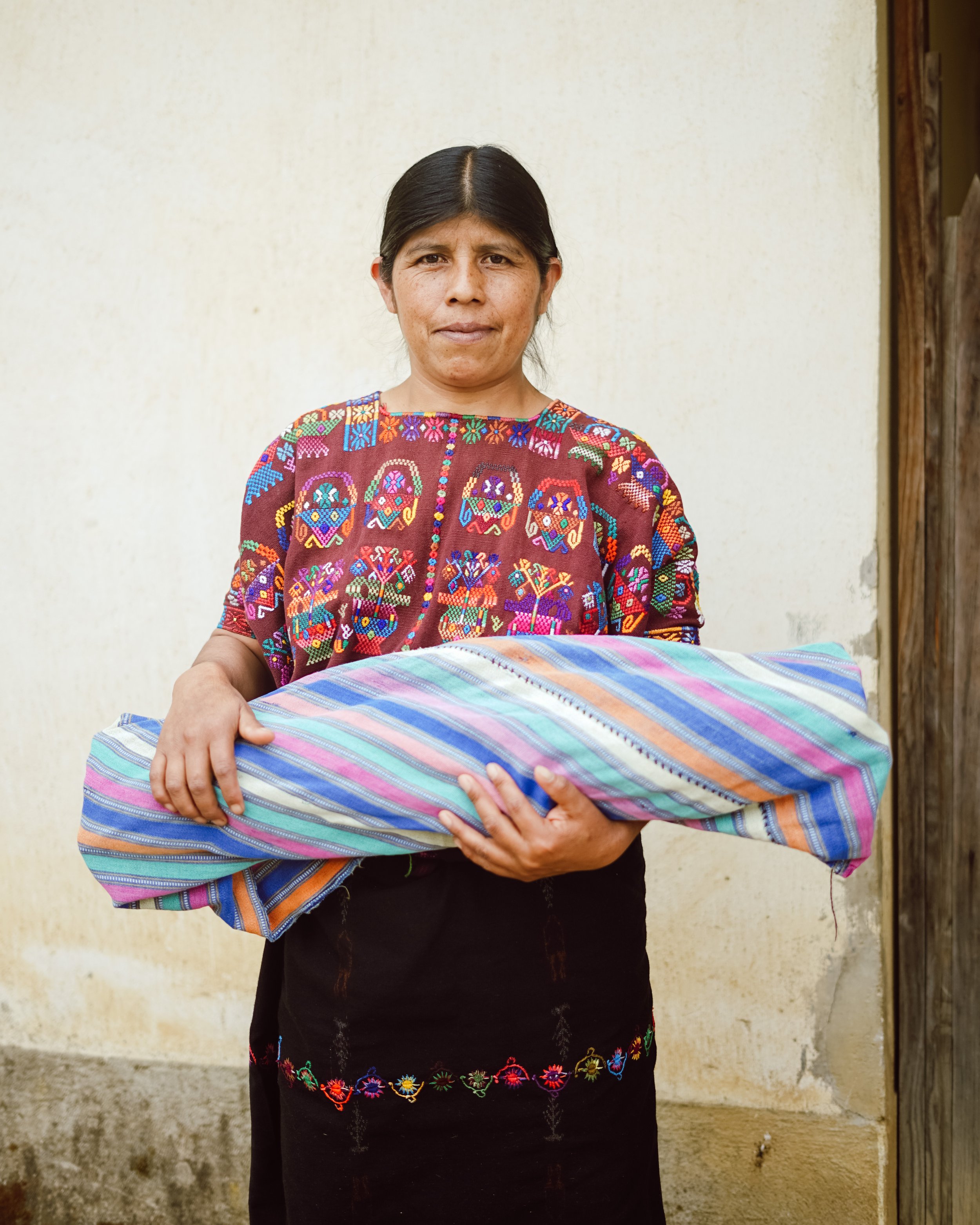
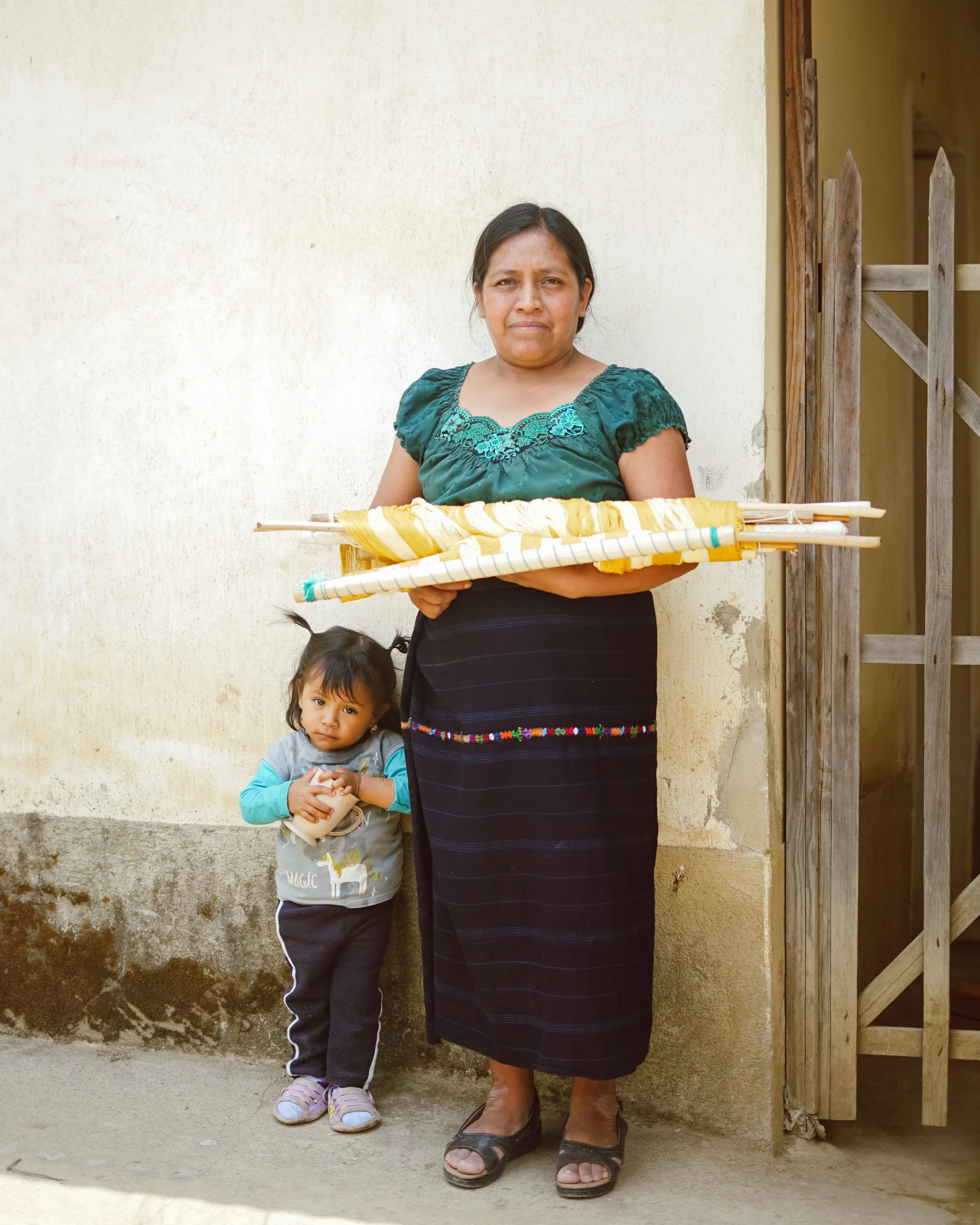
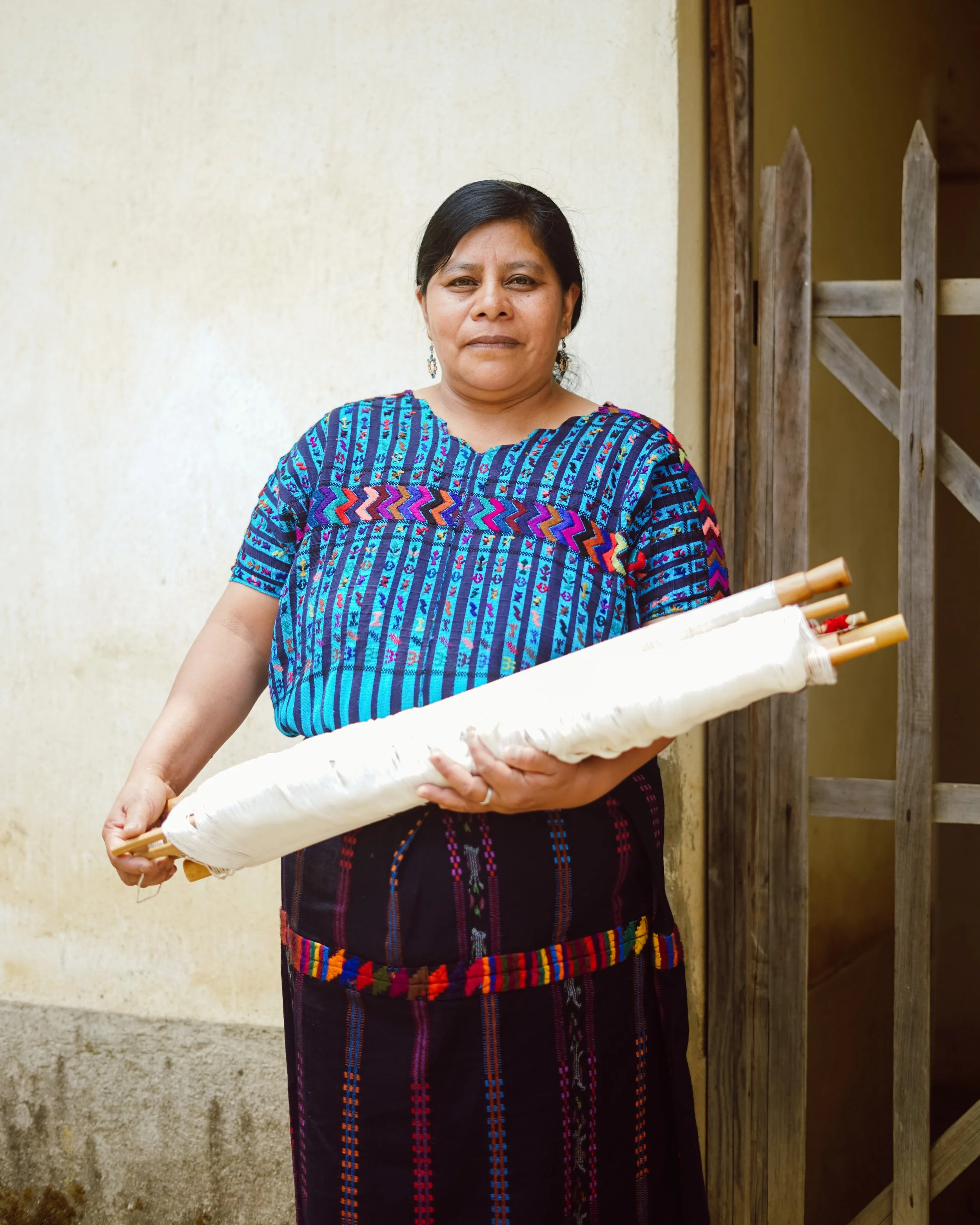
When Flory and I visit the cooperative Nawal Ja’, we are always humbled by their craft when we see them working on their traditional weavings. Nawal Ja’ specializes in Brocade, one of the most intricate forms of handwoven fabrics created on the backstrap loom in Guatemala. Also known as supplemental weft weaving, brocade is often mistaken for embroidery, especially by people new to Guatemalan design or products made with handwoven fabric. Although it can resemble embroidery, the secret is on the back of the cloth, where you can see how each colored thread is placed row by row. Embroidery is more freeform where threads cross in multiple directions that can create more organic shapes. Brocade is highly calculated, mathematical, and deeply rooted in tradition.

Pascuala working on a sample in our garden for a client.
We’re constantly blown away by the mental calculations the weavers do to create both traditional motifs and custom designs we develop with brands. For each row, the weaver counts how many threads to lift in order to place the next color. Many artisans have memorized these calculations so deeply that they can feel how many threads they’re lifting, an extraordinary example of exceptional craftsmanship and skill passed down through generations.
Casa Flor Designs began working directly with Nawal Ja’ in 2020 after the NGO where Flory and I met closed. Pascuala Ixtos Tzoc, the cooperative’s president, now develops all samples for our custom design clients. Her ability to translate a digital sketch into a physical product is nothing short of remarkable.
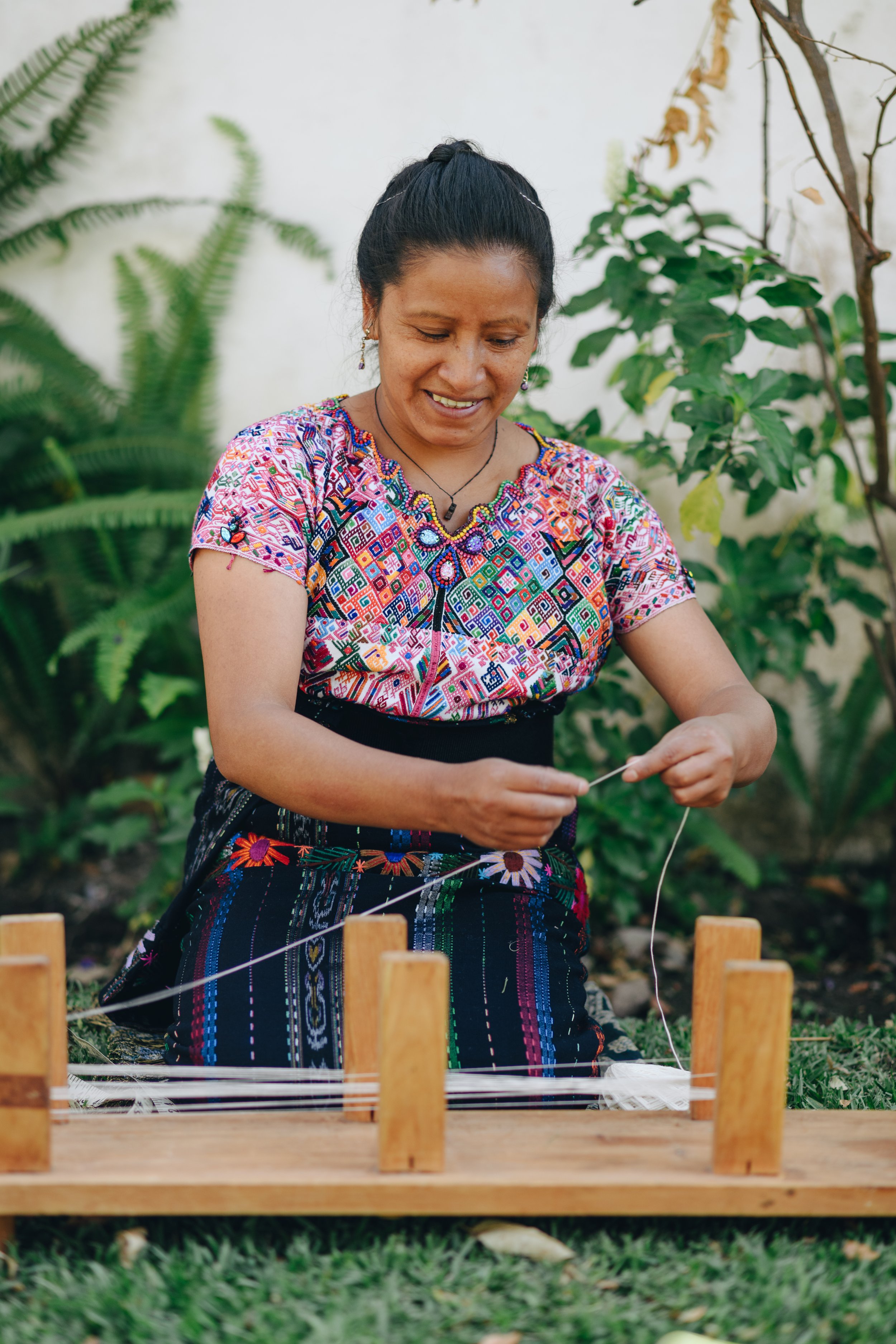
Pascuala preparing warp threads for a backstrap woven textile.
Interview with Pascuala
What do you think about traditional designs from your community being used for products for our shared clients?
This is good; through weaving we have an income and we share the brocade technique of our town.
What is your reaction to seeing a new design you create for our clients?
I feel happy with the results of each cushion; capturing the different techniques and figures on her cushions and knowing that they are unique is what makes it most special.
When did you learn how to weave?
13 years old
What is your favorite color?
Black
What is your favorite flower?
A rose
What is your favorite food?
Carne Asada
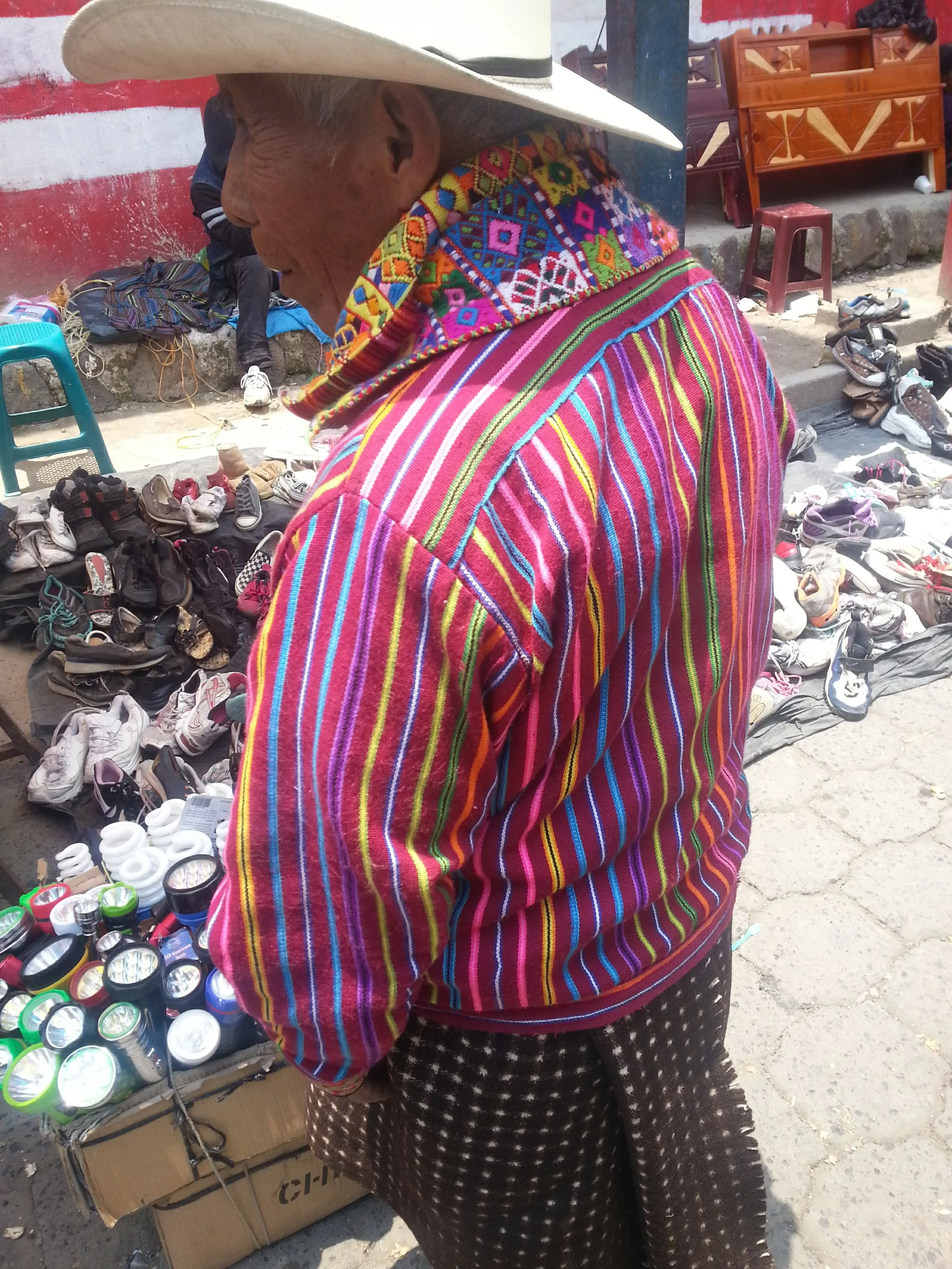
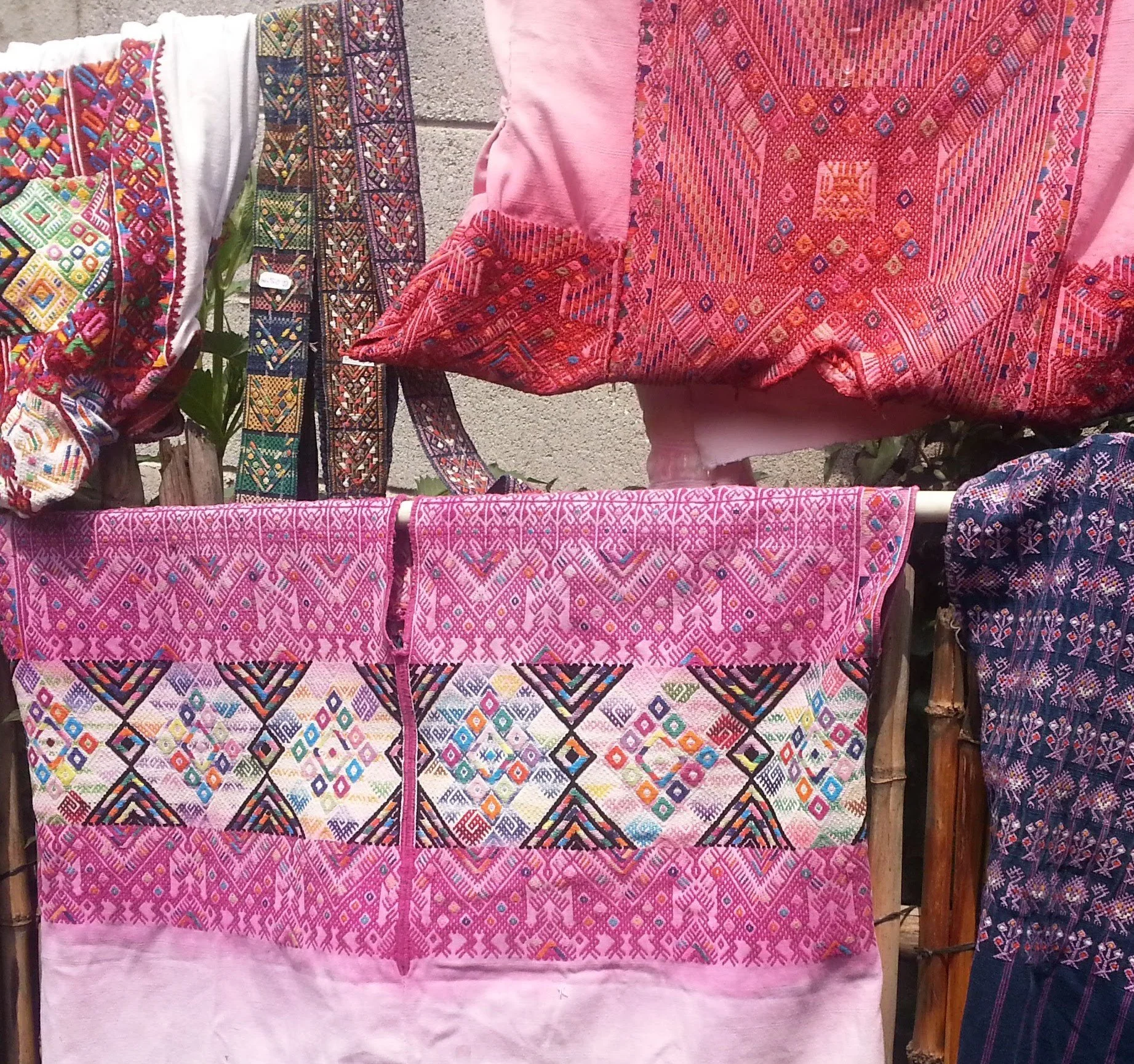
Over the years, I’ve watched the weaving traditions in Nahuala evolve. When I first visited in 2014, many women wore huipiles with a subtle ombré wash created by weaving with threads designed to bleed when washed. Today, many weavers proudly wear full brocade huipiles that are vibrant, complex, and full of symbolism.
The Nahuala Diamond Pillow, part of our wholesale pillow collection, features one of the most iconic motifs from the region. Diamonds and zigzags come together to form the Feathered Serpent iconography, a frequent Maya icon symbolizing transformation, renewal, and the cyclical nature of time. We use naturally dyed threads to honor the traditional methods that existed long before chemical dyes. The natural dyes we used here are indigo and soot from the stove. This handwoven pillow is truly an heirloom piece, rich with cultural heritage and crafted through a centuries-old technique that we are proud to help preserve through direct sourcing with artisan communities.
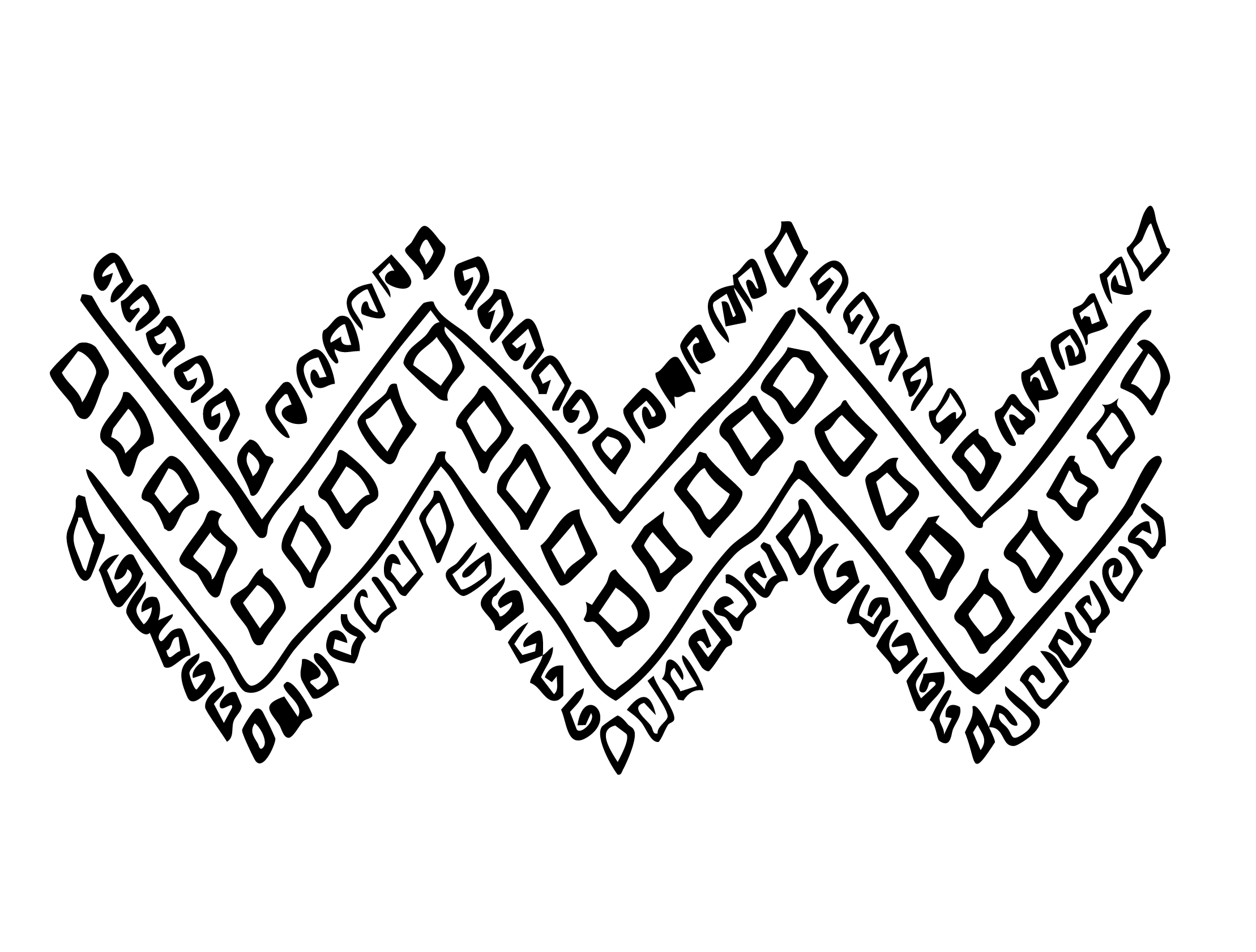
The Feathered Serpent
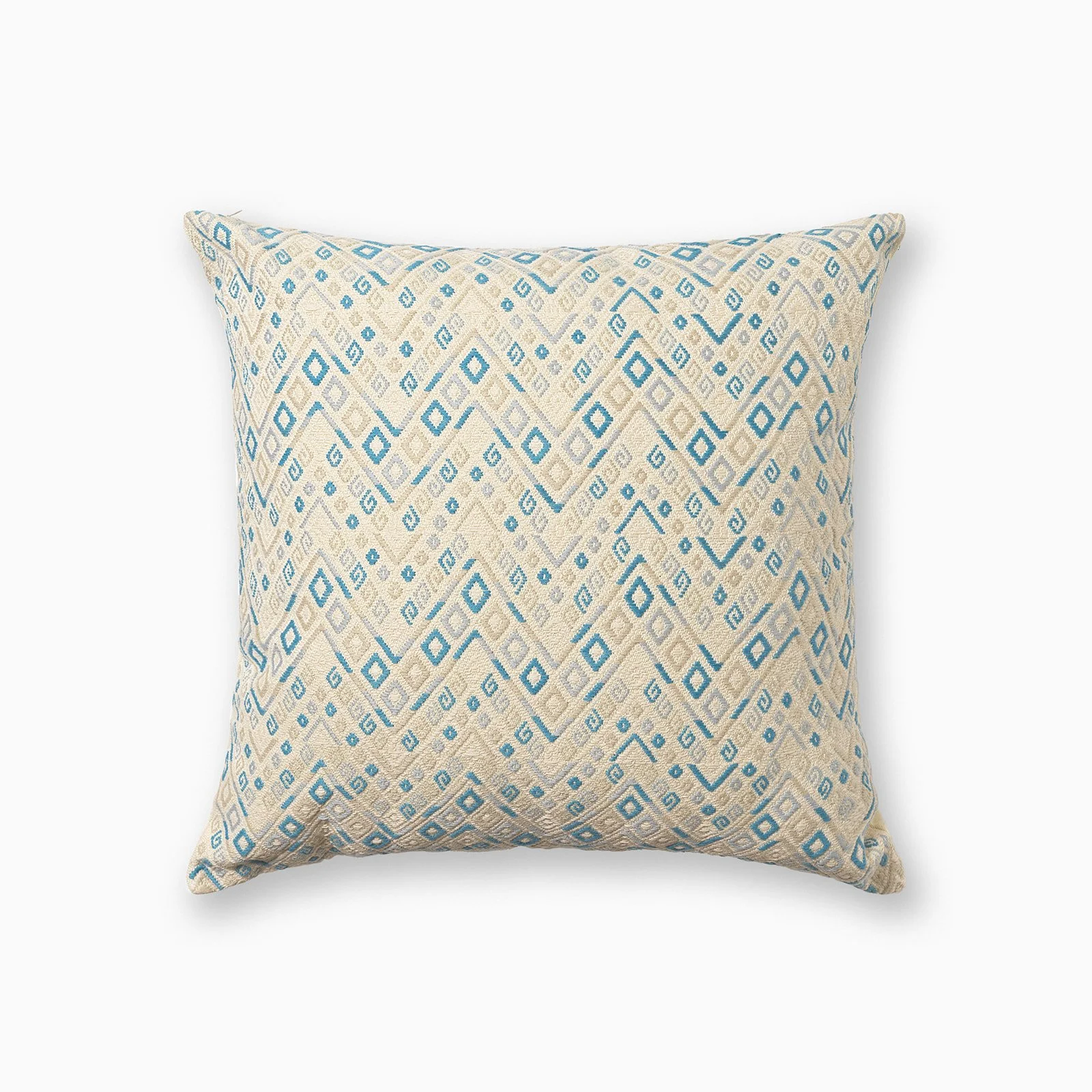
If you are a brand interested in carrying this handwoven pillow cover, or sourcing wholesale handloom, handmade fabric, contact us and we’ll share more about our wholesale program.